Signed in as:
filler@godaddy.com
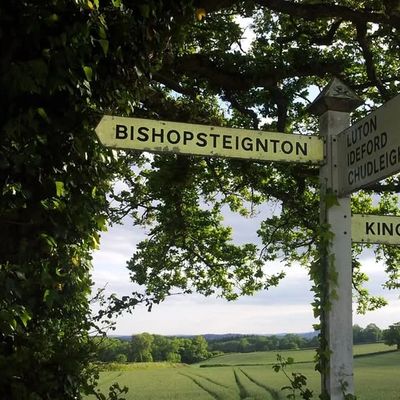
Bishopsteignton sits on the south bank of the River Teign, just inland from Teignmouth, with wide views across the Teign Estuary to the Haldon Hills. The village’s setting has shaped its story from the earliest times: sheltered enough for farming, close enough to the water for trade, and well placed on the routes that link the coast to the rich farmland of South Devon. Long before it became the village people recognise today, this landscape was already busy with human activity.
The “Bishop” in Bishopsteignton points to medieval ownership by the Bishops of Exeter, while the second part of the name reflects its connection to the River Teign. In the Middle Ages the parish was organised around the church and a patchwork of fields, orchards, and smallholdings. Like many Devon communities, life followed the rhythm of the agricultural year, with local woodland and clay soils providing materials for building, fuel, and craftwork. Over time the village developed a clear identity of its own—distinct from the nearby port towns, but never isolated from them.
From the 1600s through the 1800s, Bishopsteignton’s fortunes rose and fell with wider changes in farming, coastal trade, and local industry. The estuary offered access to markets and supplies, and the area became known for productive gardens and orchards. As turnpike roads improved travel, the village grew more connected to Teignmouth, Newton Abbot, and Exeter, making it easier for goods—and ideas—to move. These links helped shape the buildings and layout that still give the village much of its character.
During the Victorian and Edwardian period, Bishopsteignton became especially noted for its scenery and healthy air, attracting visitors and new residents who admired its views and quieter pace of life. Larger homes appeared, along with the kinds of community institutions that marked a growing and confident parish. Even as modern life changed the economy and daily routines, the village retained strong local traditions—rooted in church, community events, and the surrounding countryside.
In the 20th century and into the present day, Bishopsteignton has continued to evolve while keeping its village feel. Improved transport and changing patterns of work brought new housing and a broader mix of residents, but the landscape—estuary, lanes, and rolling fields—remains central to local identity. Today, Bishopsteignton balances being a living, working community with being a place where history is visible in the street pattern, older buildings, and enduring relationship with the River Teign.
Bishopsteignton is a hilltop village with some of the best views in South Devon, looking out across the River Teign and the Teign Estuary towards the Haldon Hills. People have lived and worked in this landscape for thousands of years, drawn by the sheltered slopes, good farmland, and easy access to the water. Even today, it feels like a place shaped by its setting—green, airy, and closely connected to the river below.
The village name gives a clue to its story. “Bishop” reflects medieval links to the Bishops of Exeter, who once held land here, while “Teign” ties it firmly to the river. For centuries Bishopsteignton was a farming parish of fields, orchards, and smallholdings, with daily life centred on the church and the seasons. Many of the lanes and boundaries you see now still follow patterns laid down long ago.
As travel improved in the 1700s and 1800s, Bishopsteignton became more closely linked with nearby Teignmouth, Newton Abbot and Exeter. Local produce could reach markets more easily, and the village slowly grew as homes and businesses gathered along its main routes. The wider area also benefitted from coastal trade and river activity, and Bishopsteignton—close to the action but slightly set back—offered both convenience and calm.
In the Victorian era, the village’s big skies and sweeping estuary views made it popular with visitors and people looking for a healthier pace of life. New houses appeared, and Bishopsteignton developed the kind of friendly community feel that still defines it. It’s easy to imagine newcomers of the time taking the same pauses you might today—stopping at a viewpoint, strolling past the church, or simply enjoying the light over the water.
Modern Bishopsteignton has grown and changed, but it’s kept its village character. You’ll still find a strong sense of community, a countryside backdrop, and a closeness to the river that makes the setting feel special. Whether you’re here for a walk, a pub lunch, or a longer stay, the history of Bishopsteignton isn’t locked in a museum—it’s part of the views, the lanes, and the everyday life of the place.